

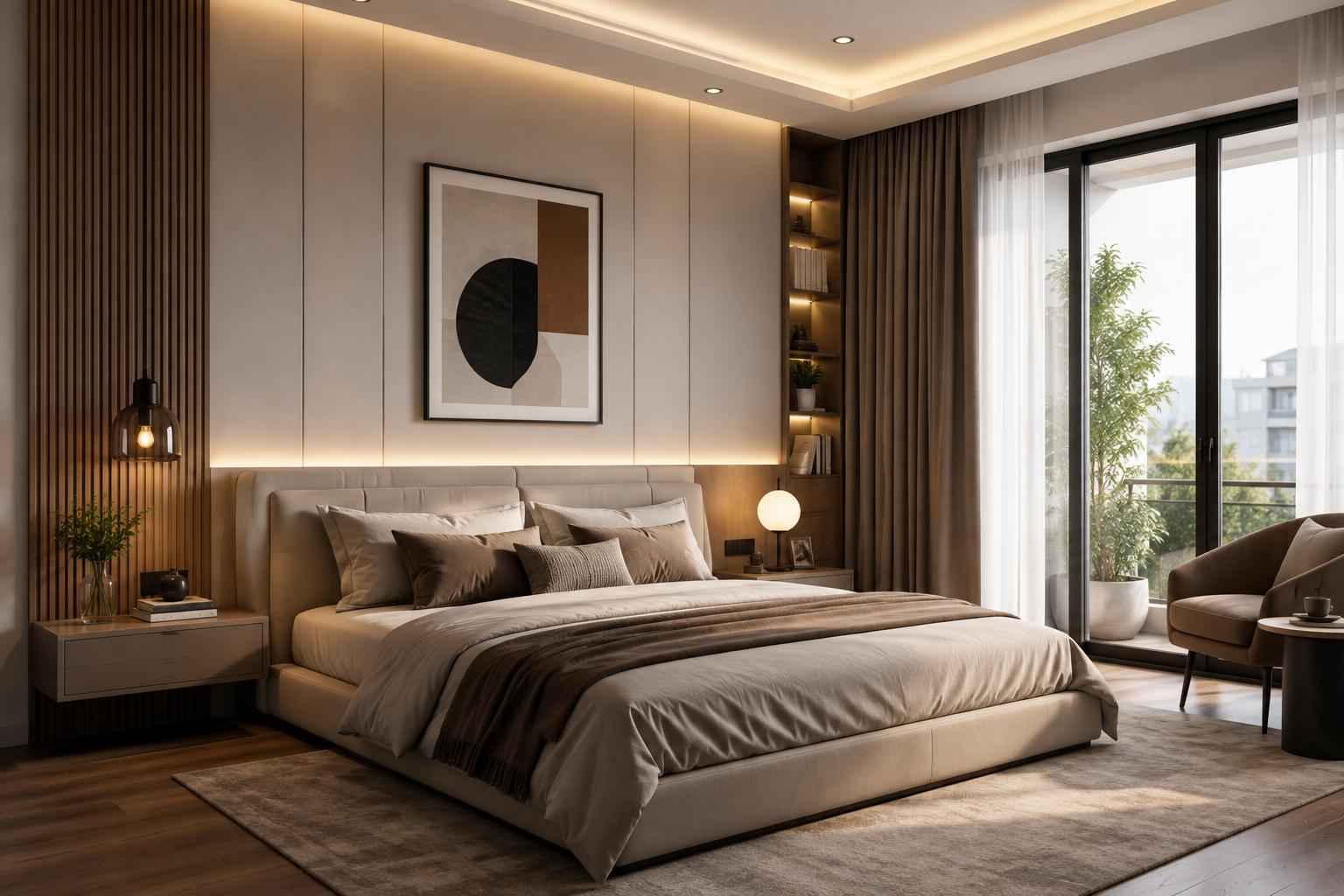
Modern Bedroom Interior Design Ideas for a Comfortable Home
The bedroom is one of the most personal spaces in a home. It is where we start and end our day, so its design should feel comfortable, peaceful, and suited to our lifestyle. A modern bedroom does not necessarily mean an expensive or highly decorative space. With the right combination of colours, furniture, lighting, and storage, even a simple bedroom can have a stylish and inviting appearance.
Here are some practical ideas to consider when planning a modern bedroom interior.
Choose a Calm Colour Palette
The colours used in a bedroom can influence the overall mood of the space. Soft neutrals, warm beige, muted grey, off-white, and earthy shades can create a relaxed atmosphere.
If you prefer stronger colours, consider using them on a single accent wall or through cushions, artwork, rugs, or other accessories. Keeping the main walls relatively neutral makes it easier to change the look of the room later without undertaking a complete renovation.
Select a Comfortable Bed
The bed is naturally the centre of attention in any bedroom, so its size and design should be chosen carefully. Make sure the bed fits comfortably within the room while leaving enough space for movement around it.
An upholstered headboard can add warmth and softness, while a wooden headboard can give the room a more natural and timeless appearance. Storage beds are also a practical option for bedrooms where additional storage is required.
Comfort should always come before appearance when selecting a bed and mattress.
Plan Storage Properly
A well-designed bedroom should have enough storage to keep everyday belongings organised. A cluttered room can make it difficult to relax, regardless of how attractive the furniture may be.
Built-in wardrobes can make efficient use of available wall space. Depending on your requirements, the wardrobe can include hanging sections, drawers, shelves, and dedicated areas for accessories.
For smaller bedrooms, full-height wardrobes can provide additional storage without taking up unnecessary floor space.
Use Lighting in Layers
Bedroom lighting should not depend on a single ceiling light. Different types of lighting can create a more comfortable and flexible environment.
A combination of ambient lighting, bedside lamps, wall lights, and subtle accent lighting can work well. Warm-toned lights are generally suitable for bedrooms because they create a softer atmosphere.
Lighting inside wardrobes and around dressing areas can also improve functionality while adding a refined touch to the interior.
Add Texture to the Room
A bedroom can feel flat if every surface has the same finish. Introducing different textures can make the interior warmer and more interesting.
Consider combining materials such as wood, fabric, upholstery, curtains, rugs, and soft bedding. Even a neutral colour scheme can look sophisticated when different textures are layered thoughtfully.
The aim is to create a space that feels comfortable rather than overly designed.
Keep the Furniture Proportionate
Avoid filling the bedroom with furniture simply because there is space available. A bed, wardrobe, bedside tables, and dressing unit may be enough for many bedrooms.
Choose furniture according to the size of the room. Slim bedside tables and wall-mounted units can be useful in compact spaces, while larger bedrooms can accommodate a comfortable reading chair or a small seating area.
Leaving some open space can make the bedroom feel calmer and more spacious.
Create a Simple Accent Wall
An accent wall can add character without overwhelming the entire bedroom. The wall behind the bed is usually a natural place for one.
You could use a different paint colour, wooden panelling, textured wallpaper, fabric upholstery, or decorative wall panels. The choice should complement the rest of the room rather than compete with it.
A simple design can often have more impact than an overly complicated feature wall.
Bring in a Touch of Nature
Indoor plants can add freshness and softness to a bedroom. Depending on the amount of natural light available, choose plants that are suitable for the conditions of the room.
If maintaining plants is not practical, natural wood finishes, woven textures, or botanical artwork can provide a similar connection with nature.
Small touches are usually enough—you do not need to turn the bedroom into an indoor garden.
Pay Attention to Curtains and Windows
Curtains are often overlooked when planning bedroom interiors, but they can influence both the appearance and comfort of the room.
Choose curtains that complement the wall and furniture colours. If you need better light control and privacy, consider combining blackout curtains with lighter sheers.
The length and placement of curtains can also influence how tall the room appears. Hanging them closer to the ceiling can create a more elongated look.
Design for Comfort First
A beautiful bedroom should still feel like a place where you can genuinely relax. Avoid following trends simply because they are popular. Instead, think about what makes you comfortable and what you will enjoy seeing every day.
A modern bedroom works best when aesthetics and practicality come together. Thoughtful furniture, sufficient storage, comfortable lighting, suitable colours, and a clutter-free layout can transform an ordinary bedroom into a peaceful personal space.
With careful planning, your bedroom can reflect your personality while providing the comfort you need at the end of every day.


Add a comment