

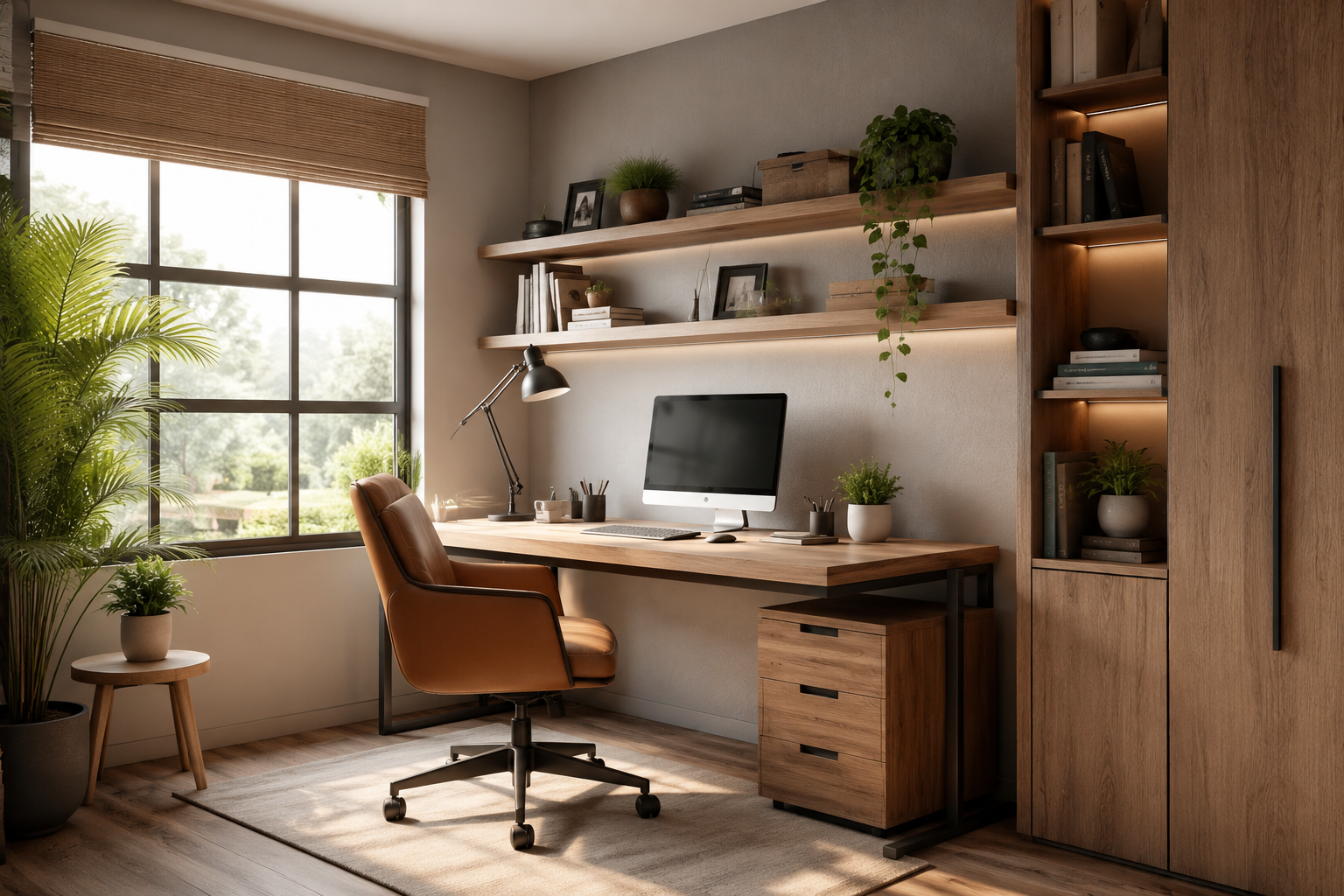
How to Create a Beautiful and Functional Home Office Interior
Working from home has changed the way many people think about their living spaces. A home office is no longer simply a desk placed in an empty corner. It needs to provide comfort, organisation, and enough focus for productive work while still fitting naturally into the home’s overall interior.
Whether you have a separate room or only a small corner available, thoughtful planning can help you create a workspace that is both practical and attractive.
Choose the Right Location
The location of your home office can have a major impact on how comfortable it is to work there. If possible, choose an area with access to natural light and some distance from common distractions.
A spare bedroom, unused corner, or part of a living room can all be converted into a workspace. The important thing is to define the area clearly so that work does not completely blend into your personal space.
Invest in a Comfortable Desk and Chair
A desk should provide enough surface area for your computer, documents, stationery, and other essentials. At the same time, it should be appropriately sized for the room.
The chair is equally important. Since you may spend several hours sitting, choose one that provides proper support and allows you to maintain a comfortable working position.
Good furniture can improve not only the appearance of the office but also the experience of working there every day.
Make Use of Vertical Storage
Home offices often need to store documents, books, stationery, and electronic accessories. If floor space is limited, wall-mounted shelves and overhead cabinets can provide useful storage without making the workspace feel crowded.
A combination of open shelves and closed cabinets can work particularly well. Open shelves can display books or decorative objects, while closed storage keeps less attractive everyday items out of sight.
Plan Cable Management
Cables can quickly make an otherwise well-designed workspace look messy. Computers, monitors, chargers, lamps, and other equipment can create a collection of wires around the desk.
Plan cable management while designing the workspace rather than trying to hide everything later. Cable trays, concealed electrical points, and organised charging areas can make the desk cleaner and easier to maintain.
Use Natural Light Wisely
Natural light can make a workspace feel more pleasant during the day. If possible, position the desk near a window without placing the screen directly in front of strong sunlight.
This can help reduce glare and make the workspace more comfortable.
If the room does not receive enough daylight, combine general ceiling lighting with a dedicated desk lamp to ensure that the work surface is properly illuminated.
Select a Calm Colour Palette
The colours around your workspace can influence the overall atmosphere. Soft neutrals, muted greens, light blues, and warm natural tones can create a calm environment.
If you enjoy stronger colours, introduce them through an accent wall, artwork, accessories, or furniture rather than covering the entire room.
A balanced palette can help the workspace feel professional without becoming dull.
Add Personal Elements
A home office should not feel like a completely impersonal corporate workspace. Add a few elements that make the area feel like your own.
Artwork, photographs, books, plants, or small decorative objects can give the room personality. Just avoid filling the desk with too many items, as unnecessary clutter can become distracting.
Create a Background That Looks Good
For people who regularly attend video meetings, the area behind the desk has become an important part of home office design.
A simple wall with shelves, artwork, wooden panels, or a subtle colour can create a clean background. Keep the area organised and avoid placing too many distracting objects behind your chair.
This is a small design consideration that can make a noticeable difference during online meetings.
Keep Work and Relaxation Separate
If your office is inside a bedroom or living room, try to create some visual separation between work and relaxation.
A compact partition, open shelving unit, different wall colour, or strategically placed furniture can help define the workspace.
At the end of the workday, being able to visually step away from the work area can make the room feel more balanced.
Design Around Your Routine
There is no single perfect home office design. Someone who works mainly on a laptop may need only a compact desk, while a professional working with multiple monitors, documents, or equipment may require considerably more space.
Think about your actual routine before finalising the design. Consider what you use every day, what needs to be stored nearby, and how much surface area you require.
A well-designed home office should support your work rather than simply look attractive in photographs.
A Better Workspace Starts With Better Planning
Creating a functional home office does not necessarily require a separate room or a large budget. Even a small area can become an effective workspace when furniture, lighting, storage, and layout are planned properly.
The aim is to create a space where you can concentrate comfortably while maintaining the style and warmth of your home. When practical requirements and interior design come together, a home office can become one of the most useful spaces in the house.


Add a comment