

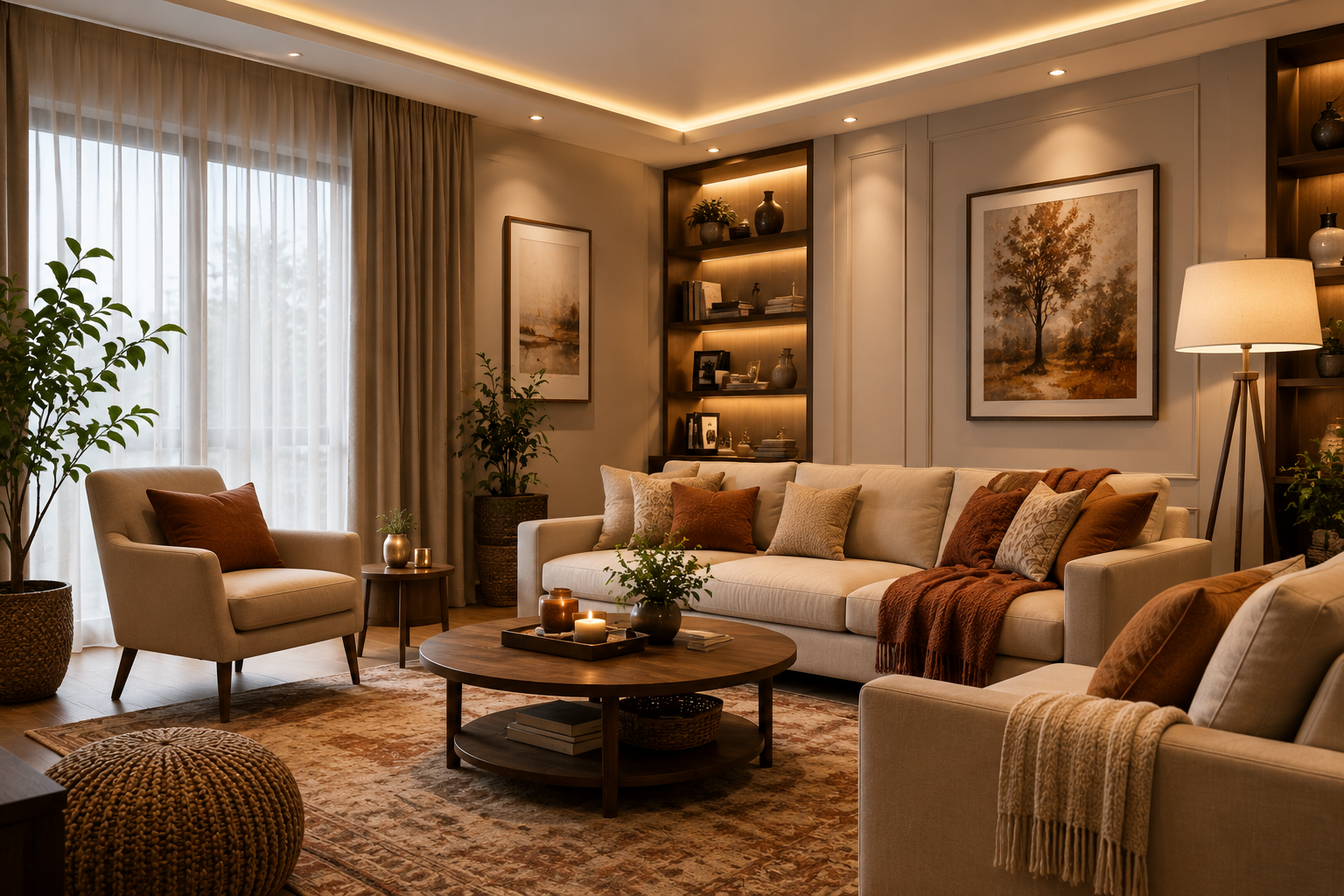
Interior Design Ideas for a Warm and Welcoming Living Room
The living room is often the first space guests see when they enter a home. It is also where families spend time together, relax after a long day, and entertain friends. Because of this, the living room should feel comfortable and welcoming while reflecting the personality of the people who live there.
A good living room design does not depend on expensive furniture or excessive decoration. The right layout, colours, lighting, and materials can make a significant difference.
Begin With a Practical Layout
Before choosing furniture, consider how the room will be used. Think about where people will sit, how they will enter and leave the space, and whether there is enough room to move comfortably.
Avoid filling every corner with furniture. Leaving some open space can make the room feel more relaxed and spacious.
The sofa is usually the main element, so its position should be decided first. Other pieces such as chairs, tables, and storage units can then be arranged around it.
Choose Comfortable Seating
A living room should look inviting, but comfort should always be a priority. Select a sofa that provides adequate seating for your household without overwhelming the room.
If the space allows, accent chairs or a compact lounge chair can provide additional seating. In smaller rooms, a well-sized sofa combined with a couple of lightweight chairs may work better than a large sectional.
The upholstery colour and material should also suit your lifestyle, especially if you have children or pets.
Create a Balanced Colour Palette
Colours help establish the mood of the living room. Warm neutrals such as beige, cream, tan, and earthy shades can create a cosy atmosphere, while soft greys and muted colours can give the room a contemporary appearance.
You can introduce stronger colours through cushions, artwork, rugs, or a single accent wall.
The goal is to create a colour combination that feels connected rather than using several unrelated shades.
Use Lighting to Create Atmosphere
Lighting can completely change the character of a living room. Instead of depending on one bright ceiling fixture, consider using several layers of light.
Ceiling lights can provide general illumination, while floor lamps, table lamps, wall lights, and accent lighting can create softer areas throughout the room.
Warm lighting is particularly effective in the evening when you want the living room to feel comfortable and relaxed.
Add Different Textures
Texture adds depth to an interior, especially when the colour palette is simple. A combination of soft upholstery, wooden furniture, curtains, rugs, cushions, and decorative objects can make the room feel richer without adding too many colours.
For example, a neutral sofa can be paired with textured cushions and a soft rug to create a more inviting seating area.
Small changes in texture can often make a bigger difference than adding more decorative objects.
Select the Right Centre Table
A centre table should be practical as well as visually appropriate. It needs to provide enough surface area without making movement around the sofa difficult.
For compact living rooms, nesting tables or smaller round tables can be useful. Larger rooms can accommodate a bigger rectangular or oval table.
The material should complement the rest of the furniture. Wood can add warmth, while glass or metal can give a more contemporary feel.
Make the TV Unit Part of the Design
The TV wall often becomes one of the most noticeable features in a modern living room. Rather than treating the television as a separate object, integrate it into the overall interior.
A customised TV unit can combine storage, display shelves, concealed cabinets, and decorative finishes. This allows electronic equipment and everyday items to remain organised while keeping the wall visually clean.
Bring Nature Indoors
Plants can make a living room feel fresher and more welcoming. A large indoor plant can fill an empty corner, while smaller plants can be placed on shelves or side tables.
If natural plants are difficult to maintain, natural wood, woven materials, or botanical artwork can introduce similar organic elements.
Keep Decoration Personal
A living room should reflect the people who live in the home. Family photographs, artwork, books, travel memories, and other meaningful objects can make the space feel personal.
However, avoid displaying everything at once. Select a few pieces that work with the overall interior and change them occasionally if you want a refreshed look.
Make the Room Feel Like Home
The best living rooms balance appearance with comfort. Every element—from the sofa and lighting to the smallest decorative detail—should have a reason for being there.
Instead of trying to copy a showroom or follow every interior trend, focus on creating a room that suits your lifestyle and feels natural to live in.
With thoughtful planning, the living room can become one of the most comfortable and memorable spaces in the home—a place that looks beautiful while still feeling genuinely lived in.


Add a comment