

Smart Storage Ideas for a Clutter-Free Home Interior
A beautiful home can quickly lose its charm when everyday belongings are left scattered around. From clothes and books to kitchen supplies and electronic accessories, modern homes often need much more storage than we initially expect.
The solution is not always adding more cabinets. Good interior design is about creating storage that fits naturally into the space while keeping the home organised and comfortable.
Here are some practical storage ideas that can help you make better use of your home.
Make Use of Vertical Space
When floor space is limited, look at your walls. Tall cabinets and full-height storage units can provide considerably more storage without occupying additional floor area.
A floor-to-ceiling wardrobe in the bedroom, for example, can make use of space that would otherwise remain unused. The same idea can be applied to living rooms, kitchens, and home offices.
Vertical storage also gives the interior a clean and organised appearance when designed properly.
Choose Built-In Wardrobes
Freestanding wardrobes can sometimes leave awkward gaps between the furniture and the ceiling or walls. Built-in wardrobes are designed according to the dimensions of the room, allowing the available space to be used more efficiently.
You can customise the internal layout according to your needs, including hanging sections, drawers, shelves, shoe storage, and accessory compartments.
Sliding doors can also be useful in smaller bedrooms because they do not require additional space to open.
Use Storage Under the Bed
The area underneath the bed is often overlooked. A bed with built-in drawers or hydraulic storage can provide useful space for items that are not needed every day.
Seasonal clothing, extra bedding, luggage, and other occasional-use items can be stored here without taking up additional room.
This can be particularly helpful in apartments where storage space is limited.
Plan Kitchen Storage Carefully
The kitchen contains many different types of items, so storage needs to be planned around how the space is actually used.
Deep drawers can be useful for pots and pans, while pull-out units can make narrow spaces more practical. Tall units can accommodate appliances or pantry items, and corner storage solutions can help make difficult areas more accessible.
Keeping frequently used items within easy reach can also make everyday cooking more convenient.
Add Storage to the Living Room
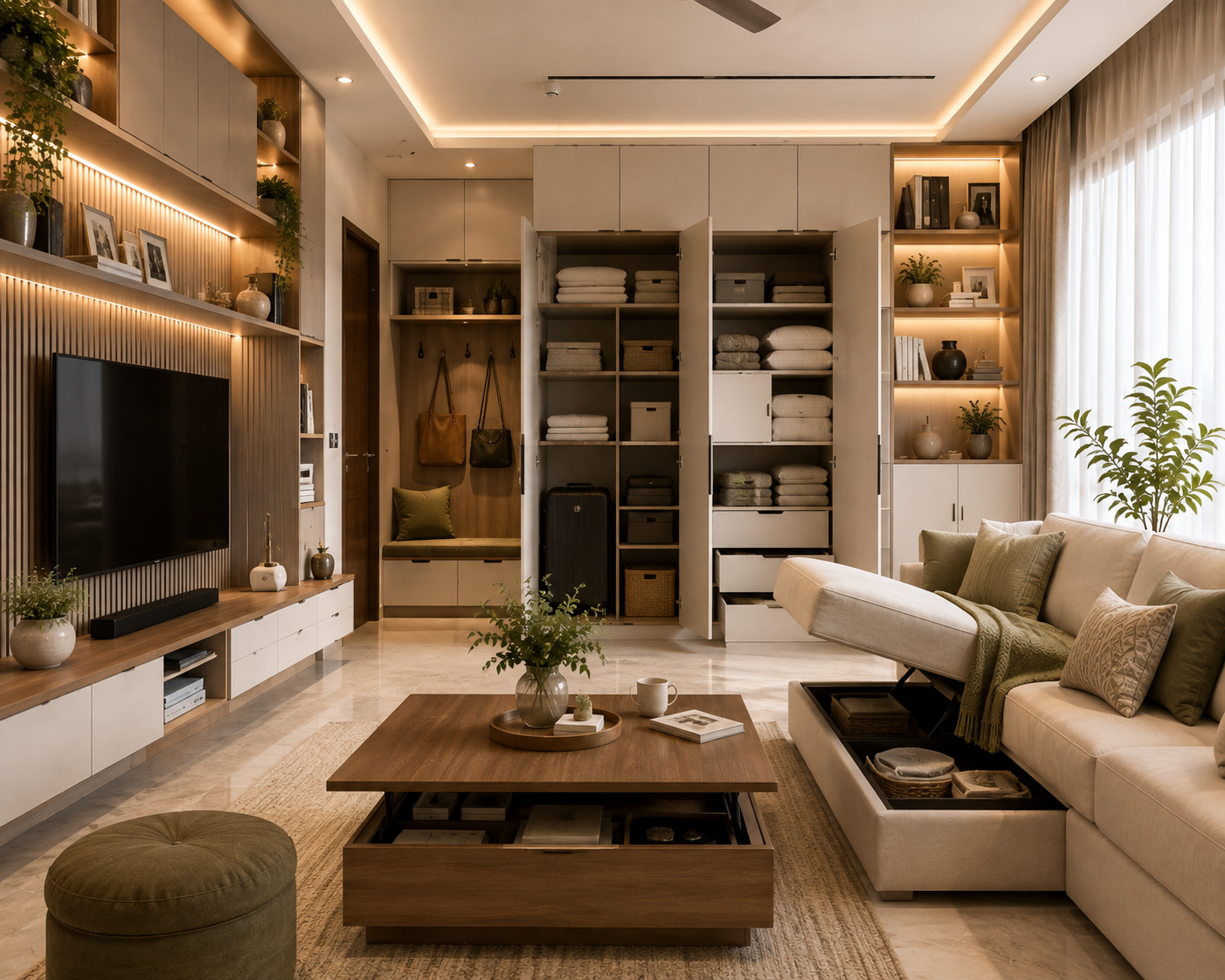
The living room does not have to rely entirely on a large cabinet for storage. A well-designed TV unit can combine display areas with closed storage for books, electronics, documents, and other belongings.
Floating shelves can be used for smaller decorative items, while storage ottomans can provide both seating and hidden storage.
The best solution is often a combination of open and closed storage. Closed cabinets keep clutter hidden, while open shelves allow you to display selected pieces.
Make the Entrance More Functional
The entrance of a home is one of the first places where clutter tends to collect. Shoes, keys, bags, and other everyday items can quickly make the area look untidy.
A compact shoe cabinet, wall hooks, drawers, or a small console can provide dedicated places for these belongings.
If space allows, a built-in bench with shoe storage underneath can make the entrance both practical and welcoming.
Create a Dedicated Home Office Storage Area
With more people working from home, office storage has become an important part of residential interiors.
A compact desk with overhead cabinets, drawers, or wall-mounted shelves can keep documents and stationery organised without requiring an entire room.
Cable management should also be considered. Keeping wires organised can make the workspace look cleaner and more professional.
Use Furniture With More Than One Purpose
Multi-functional furniture can be especially valuable in smaller homes. A coffee table with storage, a bench with drawers, or a bed with integrated compartments can serve two purposes without adding more furniture to the room.
This approach helps maintain open floor space while providing the storage required for everyday living.
Keep Some Storage Hidden
Not everything needs to be displayed. Open shelves can look attractive, but too many visible objects can make an interior feel busy.
Use closed cabinets for everyday clutter and less decorative items. This creates a cleaner visual appearance while still keeping everything accessible.
A good balance between open and concealed storage can make a home feel both practical and stylish.
Design Storage Around Your Lifestyle
Storage works best when it reflects the way you live. A family with children will have different requirements from a couple or someone living alone.
Before planning cabinets and shelves, make a list of what you actually need to store. Think about seasonal items, appliances, clothing, books, cleaning supplies, and other belongings.
With proper planning, storage can become an integrated part of the interior rather than something added later.
A Clutter-Free Home Starts With Good Planning
An organised home does not necessarily require more space. It requires better use of the space you already have.
From built-in wardrobes and under-bed storage to practical kitchen cabinets and multifunctional furniture, there are many ways to create storage without compromising on style.
When storage is planned along with the rest of the interior, the result is a home that looks cleaner, feels more spacious, and works better for everyday life.


Add a comment