

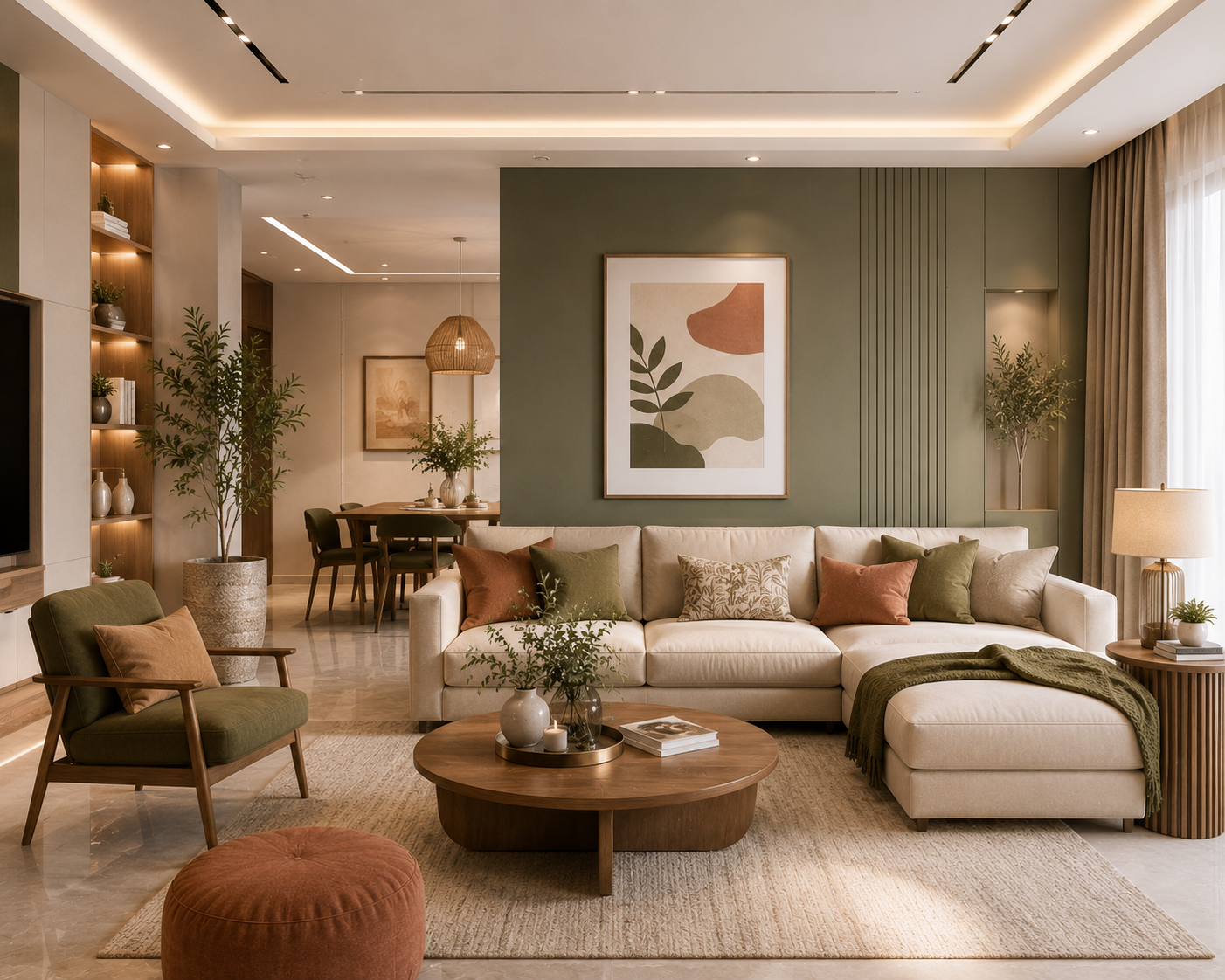
How to Choose the Right Colour Scheme for Your Home Interior
Choosing colours for your home can be exciting, but it can also become confusing when you have too many options. The right colour scheme can make a room feel spacious, warm, elegant, or energetic, while the wrong combination can make even a well-designed space feel unbalanced.
A good interior does not require dozens of colours. In most cases, a carefully selected combination of shades, materials, and textures is enough to create a beautiful and cohesive home.
Start With the Mood You Want
Before selecting a colour, think about how you want the room to feel. Bedrooms usually work well with calm and soothing shades, while living rooms can accommodate warmer or more expressive colours.
Soft neutrals can create a relaxed atmosphere, whereas deeper greens, blues, or earthy tones can add character and warmth. Understanding the mood you want makes the selection process much easier.
Consider the Natural Light
Natural light can significantly change how a colour looks throughout the day. A shade that appears warm in a showroom may look completely different in your home depending on the direction of the windows and the amount of sunlight entering the room.
Rooms with plenty of natural light can generally accommodate both light and darker colours. For rooms with limited daylight, lighter shades can help create a brighter and more open appearance.
It is always a good idea to test paint samples in the actual room before making a final decision.
Follow the 60-30-10 Rule
One simple way to create a balanced colour scheme is to follow the 60-30-10 approach.
Around 60% of the room can use a dominant colour, usually through walls and larger surfaces. About 30% can be a secondary colour used on furniture, curtains, or other larger elements. The remaining 10% can be an accent shade introduced through cushions, artwork, accessories, or smaller decorative details.
This creates variety without making the room feel visually crowded.
Think About the Furniture
Wall colours should not be selected independently from the furniture. Consider the colours and finishes of your sofa, bed, dining table, wardrobes, flooring, and other permanent elements.
For example, natural wooden furniture can work beautifully with warm neutrals and earthy shades. If your furniture has a darker finish, lighter walls can provide contrast and prevent the room from feeling too heavy.
Creating a colour palette around existing furniture is often easier than replacing everything to match a new wall colour.
Use Neutral Colours Wisely
Neutral colours are popular for a reason. White, beige, cream, grey, and taupe provide a flexible foundation for almost any interior style.
However, a completely neutral room can sometimes feel flat. Adding different textures, wood finishes, artwork, plants, or small amounts of colour can give the space more depth.
The goal is not simply to use neutral colours but to create variation within them.
Create an Accent Wall
If you want to introduce a bold colour but do not want it throughout the room, an accent wall can be a good solution.
The wall behind a bed or sofa is often suitable for this purpose. You can use a deeper paint shade, wallpaper, textured finish, wooden panels, or another decorative treatment.
An accent wall should support the overall design rather than become the only thing people notice when they enter the room.
Connect Colours Between Rooms
In an open-plan home, colours should flow naturally from one space to another. This does not mean every room needs to use exactly the same colour.
Instead, repeat certain shades or materials across different areas. A colour used in the living room can appear again in a cushion, artwork, dining chair, or decorative element elsewhere in the home.
This creates a sense of continuity while still allowing each room to have its own personality.
Do Not Forget the Ceiling
The ceiling is often treated as an afterthought, but its colour can influence the overall appearance of a room.
A light ceiling can make a room feel taller and more open. If you want a more dramatic interior, a darker ceiling can create a cosy and intimate atmosphere, particularly in larger rooms.
The choice should depend on the height, size, lighting, and style of the space.
Balance Warm and Cool Tones
Warm and cool colours can be combined successfully when there is a clear balance between them. Warm shades such as beige, terracotta, brown, and muted yellow can make a room feel welcoming, while cool tones such as blue, green, and certain greys can create a calmer atmosphere.
Rather than mixing many contrasting colours, select a primary direction and introduce the opposite temperature through smaller elements.
Choose Colours That You Will Enjoy Living With
Interior trends come and go, but your home is meant to be enjoyed for years. Instead of choosing a colour simply because it is currently popular, consider whether it suits your personality and everyday lifestyle.
A well-planned colour palette should work with your furniture, lighting, flooring, and overall interior style. When these elements are considered together, the result feels natural rather than forced.
With thoughtful colour selection, even a simple home can feel sophisticated, comfortable, and personal. The right shades do more than decorate a room—they help create the atmosphere and character of the entire home.


Add a comment