

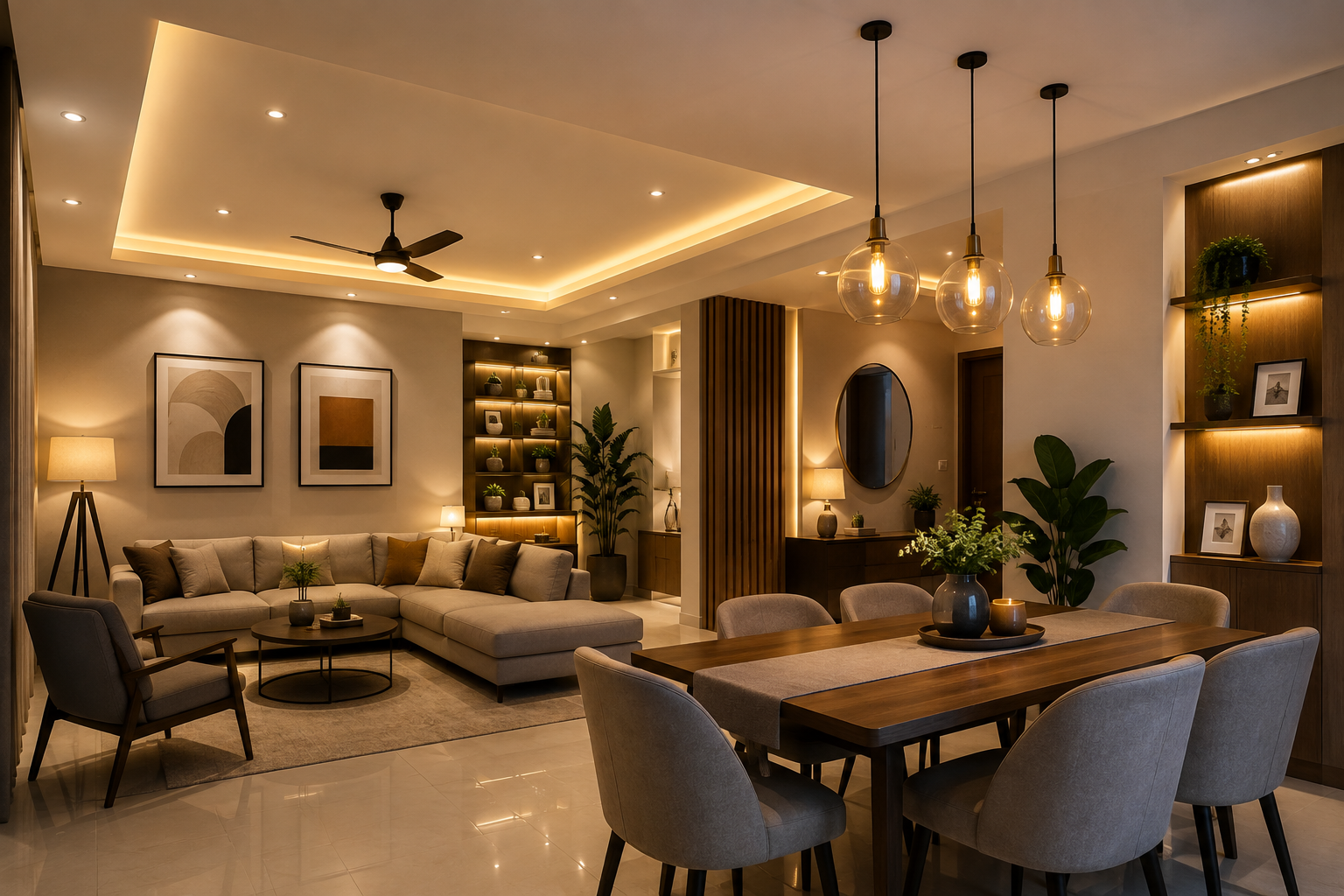
How to Choose the Right Lighting for Your Home Interior
Lighting is one of the most important elements of interior design, yet it is often considered only after the furniture, colours, and finishes have been selected. The right lighting can change the mood of a room, highlight important features, and make everyday activities more comfortable.
A thoughtfully designed home usually combines different types of lighting rather than depending on a single light source. Here are some things to consider when planning lighting for your interiors.
Start With Natural Light
Before selecting artificial lighting, understand how much natural light each room receives. Windows, balconies, skylights, and the direction of the room can all influence the amount of daylight available.
Make the most of natural light by keeping windows relatively unobstructed and choosing curtains that allow daylight to enter when required.
Natural light can make colours appear more vibrant and help create an open, pleasant atmosphere during the day.
Understand the Three Main Types of Lighting
Interior lighting can generally be divided into three categories: ambient, task, and accent lighting.
Ambient lighting provides general illumination throughout a room. Ceiling fixtures, recessed lights, and larger pendant lights are common examples.
Task lighting is focused on areas where specific activities take place. Kitchen counters, study desks, dressing tables, and reading corners may require additional task lighting.
Accent lighting is primarily used to highlight architectural features, artwork, furniture, or decorative elements.
Combining these three types can make a room more flexible and visually interesting.
Choose Lighting According to the Room
Every room has different lighting requirements.
A living room may benefit from a combination of ceiling lights, floor lamps, and accent lighting. A kitchen needs bright and practical illumination over work surfaces. Bedrooms generally work better with softer lighting, particularly around the bed.
Bathrooms require adequate lighting around mirrors and other functional areas, while a home office needs focused lighting that supports comfortable working.
Planning lighting according to the purpose of each room makes the entire home more functional.
Use Warm and Cool Light Carefully
The colour temperature of a light can influence how a room feels. Warm lighting creates a softer and more relaxing atmosphere, making it suitable for bedrooms, living rooms, and dining areas.
Cooler lighting can provide a brighter and more energetic appearance and may be useful in certain workspaces or functional areas.
There is no need to use the same colour temperature throughout the entire home. Different spaces can have different lighting depending on their purpose.
Highlight Architectural Features
Lighting can be used to draw attention to specific features of your interior. Wall textures, artwork, wooden panels, niches, shelves, and decorative ceilings can all be enhanced with carefully positioned lights.
For example, concealed LED lighting behind a panel or inside a niche can create a subtle glow without becoming the main focus of the room.
The key is to use accent lighting selectively rather than illuminating every feature.
Plan Kitchen Lighting Properly
The kitchen requires both practical and decorative lighting. A ceiling fixture may provide general illumination, but work surfaces can still remain in shadow.
Under-cabinet lighting can solve this problem by illuminating the countertop directly. Pendant lights can also be used above an island or breakfast counter to add a decorative element.
When planning the kitchen, lighting positions should be considered alongside cabinets and electrical points.
Do Not Forget the Bedroom
Bedroom lighting should support relaxation. Bright overhead lighting is useful when cleaning or organising the room, but softer sources are more comfortable during the evening.
Bedside lamps or wall-mounted reading lights can be particularly useful. Wardrobe lighting can also make it easier to find clothes without having to turn on all the lights in the room.
A dimmable lighting system can provide additional flexibility.
Use Lighting to Make Small Spaces Feel Larger
Lighting can influence the perceived size of a room. Well-lit walls and ceilings can make a compact space feel more open.
In smaller rooms, recessed lights, wall lights, mirrors, and concealed lighting can help avoid the heavy appearance created by large fixtures.
However, more lighting does not always mean a better result. The placement and intensity of the light are equally important.
Consider the Design of the Fixtures
Light fixtures are not only functional elements. They can also contribute to the interior style.
A sculptural pendant can become a focal point above a dining table, while minimalist recessed lights can support a clean contemporary design.
Choose fixtures that complement the furniture, materials, and overall character of the room rather than selecting each light independently.
Plan Lighting Before the Interior Is Finished
Lighting should ideally be considered during the early stages of interior planning. Electrical points, switches, ceiling details, cabinetry, and furniture placement all affect where lights should be installed.
Making these decisions early can prevent visible wires, awkward fixtures, and unnecessary modifications later.
Let Lighting Complete the Interior
Good lighting can make a well-designed room feel even better. It brings out colours, highlights textures, creates atmosphere, and supports the way you use each space.
Rather than treating lighting as the final decorative detail, consider it an essential part of the interior from the beginning. With a thoughtful combination of natural light, ambient illumination, task lighting, and accents, your home can become more comfortable, functional, and visually appealing.


Add a comment